
Recognised institutions
Universities and institutes in France publish their programme structures and quality frameworks openly.
Study Abroad · France 
Business and engineering schools, design institutes and public universities with English-taught options.
Overview
France offers public universities alongside grandes écoles and specialist schools in business, engineering, design and hospitality.
A growing number of programmes are taught fully in English, while French language courses are often available alongside your degree.
We help you navigate the application platforms and requirements that apply to your chosen institution type.
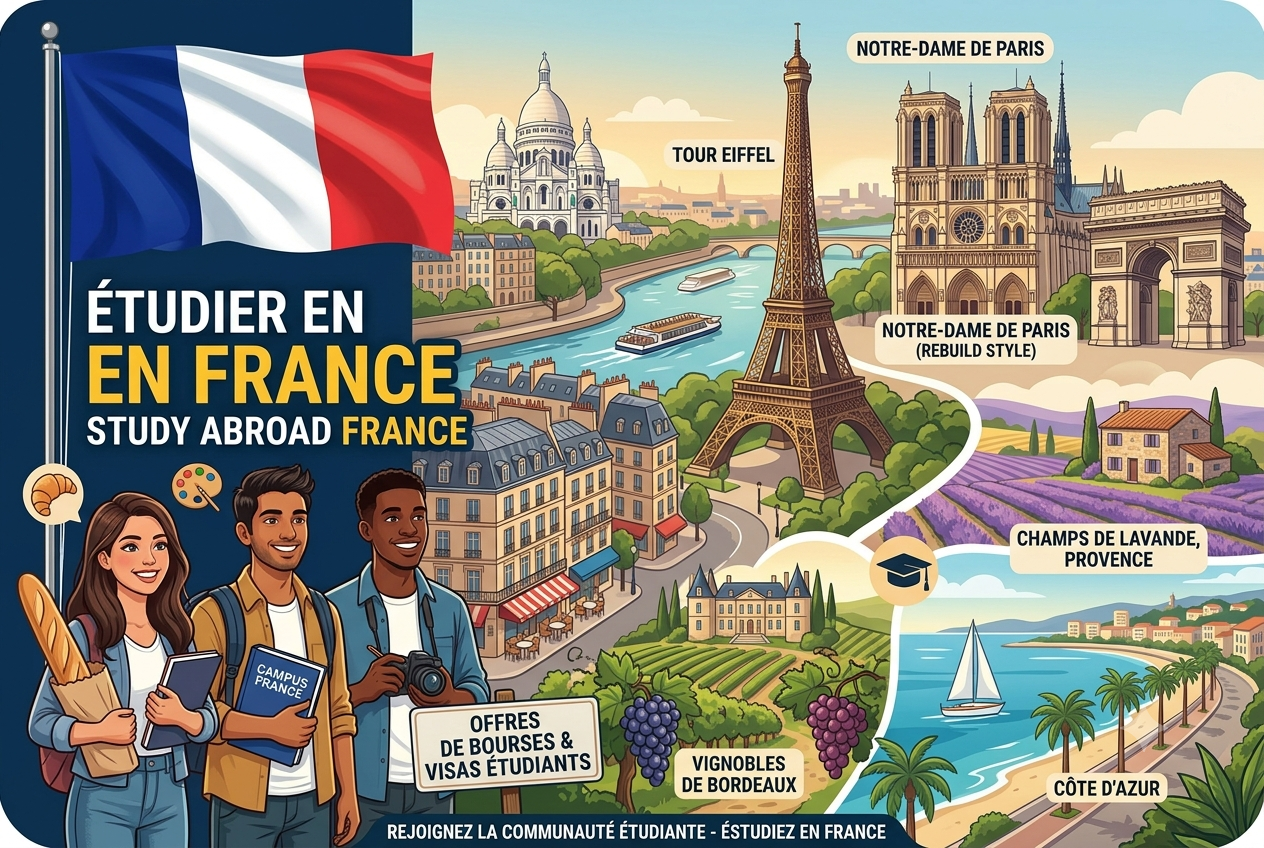
Why this destination
The reasons students most often choose this destination, explained without exaggeration.
Universities and institutes in France publish their programme structures and quality frameworks openly.
Campuses in France host students from many countries, with orientation and support services for newcomers.
Study options span business, engineering, design, hospitality and other disciplines at undergraduate and postgraduate level.
Many programmes include projects, laboratory work, internships or industry-linked assignments.
Living in France gives you exposure to a new culture, language and professional environment.
We manage your shortlist, documentation and deadlines so nothing is missed during the process.
Education system
How the academic system is structured and what that means for your studies.
Clear credit structures make it easier to plan progression and transfers.
A growing number of programmes are delivered in English; local language study is often optional.
Institutions typically offer academic advising, career guidance and student welfare support.
France is well connected for travel, making it convenient for students and visiting family.
Programmes
Entry points across levels so you can apply where your profile fits best.
Undergraduate programmes across arts, science, commerce and technology.
Postgraduate programmes with taught, research or project-based structures.
Shorter, skills-focused programmes designed around specific career roles.
Preparatory routes for students who need extra academic or language preparation.
Institutions
We shortlist specific institutions during counselling, based on your profile and budget.
Comprehensive institutions offering degrees across most academic disciplines.
Practice-oriented programmes with laboratory, workshop and project work.
Management, finance, marketing and international business programmes.
Computing, engineering and applied technology programmes with modern facilities.
Programmes in design, media, architecture and the creative industries.
Life sciences and allied health programmes, subject to specific entry requirements.
Eligibility
Documents
Process
A clear, staged process so you always know what happens next.
We review your academic background, budget and career goals to shortlist courses and institutions that genuinely fit you.
Our team helps you prepare a complete, well-presented application file and submits it within the institution's intake deadlines.
Once offers arrive, we explain the conditions, help you compare options and guide you through acceptance and fee formalities.
We assist with visa documentation, interview preparation, accommodation guidance and a structured pre-departure briefing.
Planning
We share current published figures for your shortlist during counselling — no estimates or promises here.
Tuition fees
EUR 3,000–20,000 / year
Indicative international-student range per academic year; actual fees depend on institution, programme and study level.
Living expenses
EUR 10,000–18,000 / year
Estimated annual budget for accommodation, food and transport; city and housing choice affect the total.
Health cover
EUR 0–500 / year
Indicative annual health insurance or cover budget; requirements and eligibility differ by destination.
Application costs
EUR 400–1,200 (one-time)
Estimated application, visa and required-test costs; actual fees depend on your applications and circumstances.
Visa guidance
Studying in France usually requires a long-stay student visa. Requirements are set by French authorities and often involve a pre-consular procedure, so we work from current official guidance.
With Global Eye
What our counselling covers from your first enquiry through to arrival.
FAQs
Common questions from students planning to study in France.
Next step
Book a free counselling session and get a realistic plan built around your profile, budget and timeline.
Share a few details and a counsellor will get back to you with the next steps.
Start your journey
Talk to a counsellor about courses, intakes, documentation and timelines — with no obligation.